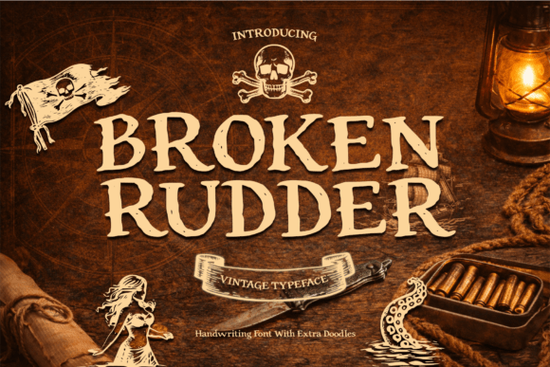
What gives Broken Rudder its distinct nautical personality?
Every character in this set was built with an organic, almost rebellious hand. Instead of crisp, sterile lines, you get slightly uneven edges, variable stroke widths, and tiny imperfections that mimic hand-carved wooden type. It’s a deliberate throwback to the kind of signage you’d find on the side of a docked boat or above a seaside tavern. The font also ships with a collection of decorative doodles small anchors, ropes, waves, and other maritime motifs so you can weave extra detail into your layouts without leaving your font menu. These extras really cement the old-world charm, and they’re easy to layer onto social graphics, product labels, or party invitations.
Who will get the most out of a font like this?
Broken Rudder isn’t a workhorse text face, and that’s the point. It shines in short, impactful bursts. Here are a few groups that consistently reach for this kind of typeface:
- Print-on-demand sellers designing pirate-themed T-shirts, mugs, or tote bags. The rugged details stay visible even on textured garments.
- Small food and beverage brands crafting packaging for spiced rum, sea-salt caramels, or smoked barbecue sauces.
- DIY crafters and scrapbookers making coastal wedding invites, treasure hunt party kits, or nautical nursery decor.
- Logo designers who need a mark that suggests heritage, adventure, or craftsmanship without reading as overly aggressive.
Because the font carries so much built-in atmosphere, it reduces the time you’d otherwise spend distressing or modifying a clean sans-serif.
How do you pair Broken Rudder without losing its character?
A display typeface this bold needs careful companions. The most practical approach is to let Broken Rudder dominate use it for the headline or main word and then bring in a clean, understated sans or serif for secondary information. A neutral grotesk works well for location cards or product descriptions, allowing the ornate letterforms to stay front and center.
If you want to lean even harder into the vintage aesthetic, you could reach for a chunky slab serif that shares a similar pre-digital feel. For instance, Charming Chunky offers a heavy, low-contrast structure that complements Broken Rudder’s rough edges without competing for attention. You can explore heavier display counterparts that keep the mood consistent while giving you a different textural layer.
Another direction is to mix in something with a hand-drawn, sketchy quality. Grime Slime brings a messy, drippy personality that pairs surprisingly well if your project needs a quirky, pirate-y edge. I’ve seen creators use that combo for birthday banners and comic-style covers, with one font handling the name and the other adding the grungy exclamations. A similar grungy display option gives you that extra distressed layer without much effort.
What actual projects does this font suit best?
Beyond the obvious pirate and ocean themes, Broken Rudder adapts nicely to historical reenactment posters, dark folklore zines, and even Halloween branding with a seafaring twist. Designers using it for apparel often size it large to let all the little carved details show through. On dark backgrounds, a warm off-white or gold fill enhances the woodcut illusion, while a slightly offset stroke can mimic the imperfections of letterpress.
You can also dial down the nautical theme entirely by leaning into the rustic, countryside side of the font. Stripped of the doodles, the raw shapes evoke old market stalls, farm signs, and hand-painted pub boards. This flexibility is one reason creators keep coming back to it.
Are there similar vintage display faces worth exploring?
While Broken Rudder has a specific rough-hewn charm, the broader category of vintage display fonts is full of interesting offshoots. Nordic Omen takes a more angular, rune-inspired path that suits atmospheric fantasy branding. If you need a historic look but with sharper, more tribal strokes, you might check out a Nordic alternative that shares a love for dramatic, ancient vibes.
For projects that need an editorial twist, Daily Mail Magazine delivers a classic serif with a printed, newsy feel. It’s an interesting choice if your layout combines captain’s log headlines with more structured body copy. Comparing that editorial style to Broken Rudder’s hand-sculpted letters can help you decide how much “raw texture” you actually need.
On the lighter, more playful end, Reaktion Kids Bold offers a rounded, child-friendly energy that shows the opposite end of the display spectrum. If you’re working on a family event that mixes a treasure map theme with approachable typography, you might look at a soft, bold typeface to handle the younger audience touchpoints while Broken Rudder holds the adventurous mood.
What should you keep in mind before buying?
Always check the glyph set for any special characters or punctuation you heavily rely on. Broken Rudder covers a solid range, but its strength is in headlines, not extended paragraphs. If your design needs a secondary script or a supporting sans, plan that pairing early so the final layout doesn’t become too busy. Test how the decorative doodles read at smaller sizes sometimes they need slight scaling to stay crisp on mobile screens or small labels.
In short, if your work ever calls for a typeface that looks like it’s been soaked in saltwater and carved with a blunt knife, this one deserves a spot in your collection. The hand-sculpted details and built-in embellishments can turn a plain product mockup into something that feels storied and tangible.
Quick next steps:
- Open a sample phrase like “Captain’s Table” and test the font in your design tool at different sizes.
- Try pairing it with a simple sans-serif for modern-nostalgic contrast.
- Browse the included doodles and see which ones fit your brand or event theme naturally.
- If you’re on the fence, experiment with a small item like a sticker or social post header first to see the real-world impact.
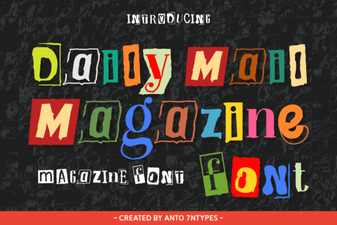 Daily Mail Magazine Font Design Ideas
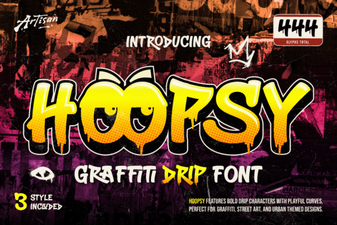 Hoopsy Font Design Trends and Creative Uses
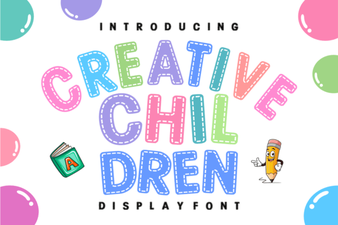 Creative Kids Font Design for Fun Projects
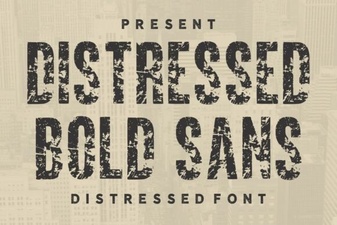 Distressed Bold Sans Font for Creative Projects
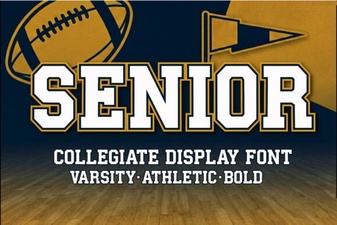 Best Senior Font Choices for Professional Design Projects
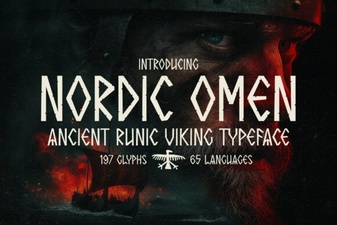 Nordic Omen Font Design and Creative Uses